How Long Does Grass Seed Take to Grow
How Long Does Grass Seed Take to Grow
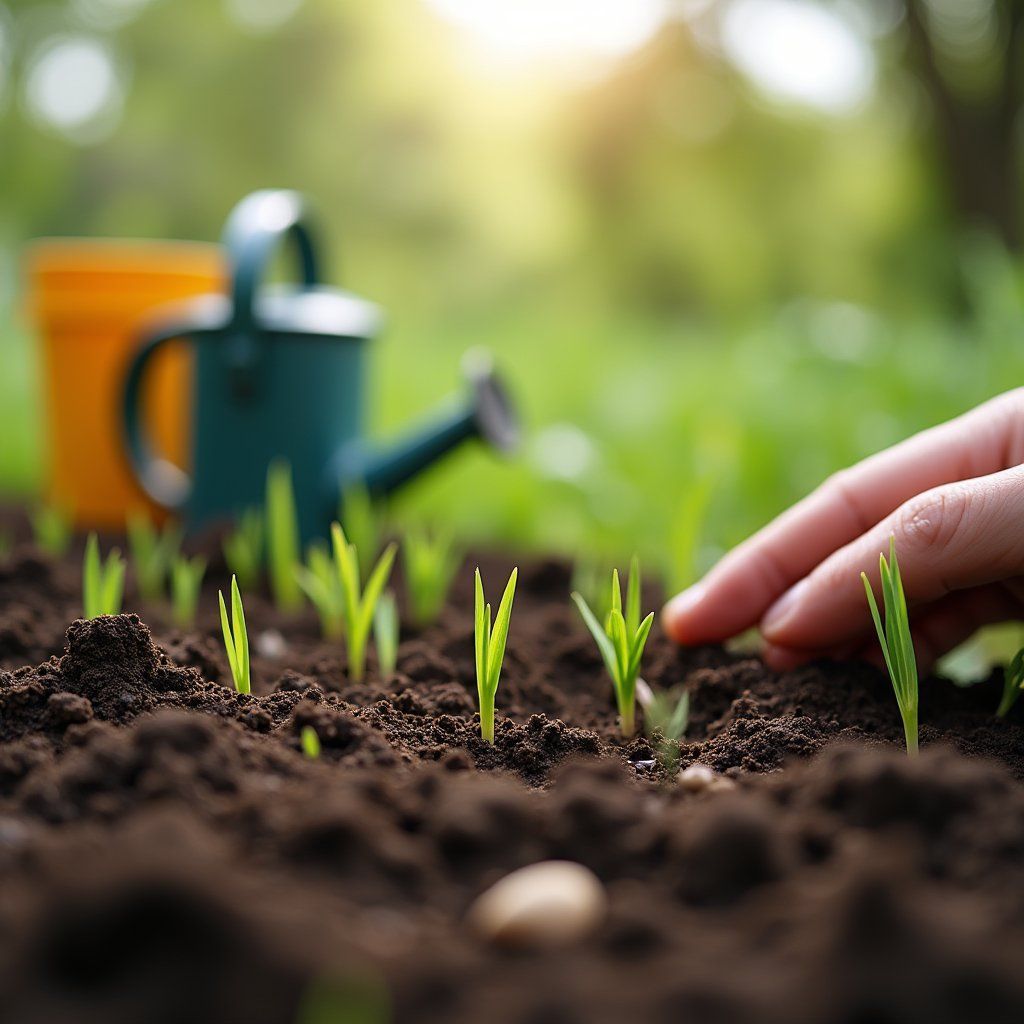
The time it takes for your grass seed to grow depends on the variety you’ve chosen. You’ll see germination in as little as 5 days with Perennial Ryegrass or up to 30 days with Kentucky Bluegrass. Under ideal conditions (65-75°F soil temperature, consistent moisture, and 6-8 hours of sunlight), most common varieties will sprout within 7-14 days. For a fully established lawn, expect 6-8 weeks. Understanding specific growing conditions and care techniques can greatly impact your success rate.
Different Types of Grass Seeds and Their Growth Rates
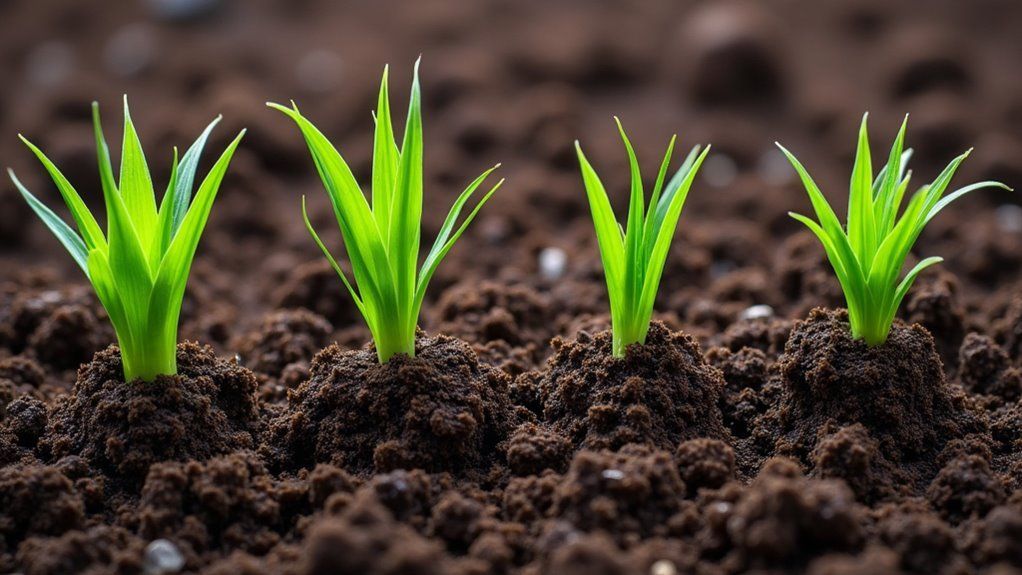
While grass seed germination rates can vary greatly, different grass species have distinct growth timelines that you’ll need to take into account when planning your lawn. Kentucky Bluegrass characteristics include a longer germination period of 14-30 days, but it develops into a dense, self-repairing turf that’s highly resilient to foot traffic and environmental stress.
Perennial Ryegrass benefits include rapid germination within 5-10 days and excellent wear tolerance, making it ideal for quick establishment. You’ll find Tall Fescue emerging in 7-12 days, while Fine Fescue takes 10-14 days. Zoysia grass requires the most patience, with germination taking 14-21 days. Understanding these timeframes will help you select the most suitable grass type for your specific needs and schedule your seeding accordingly.
Essential Growing Conditions for Fast Germination
To achieve ideal grass seed germination, you’ll need to maintain specific environmental conditions throughout the growing process. The best soil temperature should remain between 65-75°F, and proper soil preparation is vital, including loosening the top 2-3 inches and removing debris.
Your watering techniques will greatly impact germination speed. Keep the soil consistently moist but not waterlogged, typically requiring light irrigation 2-3 times daily during the initial two weeks. The soil pH should range from 6.0 to 7.0 for most grass varieties.
Ensure seeds receive adequate sunlight exposure of 6-8 hours daily. Wind protection and proper seed-to-soil contact are also essential. You’ll need to maintain humidity levels above 50% and protect newly seeded areas from foot traffic until establishment occurs.
Step-by-Step Timeline of Grass Seed Development
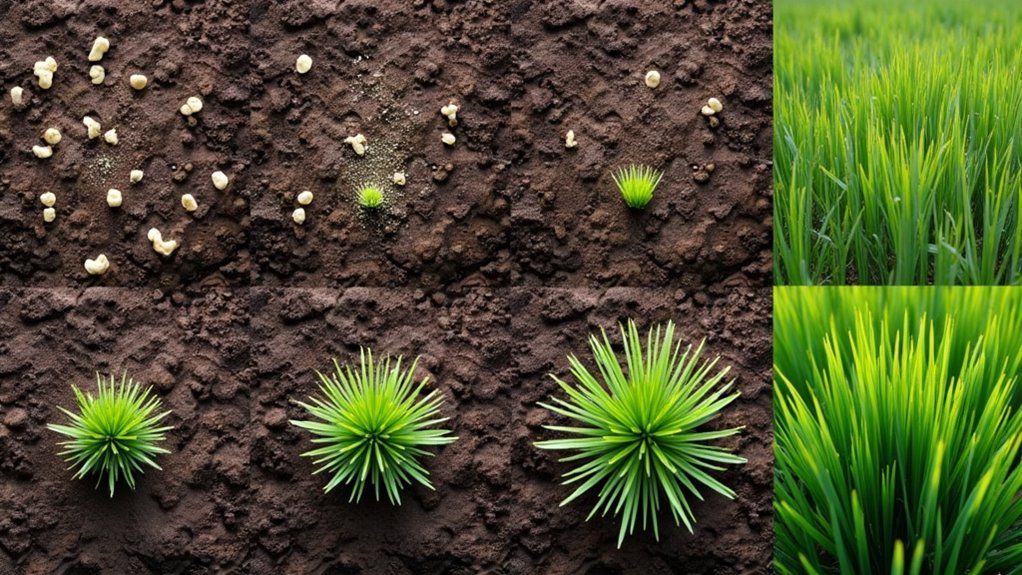
Once grass seeds are properly sown, they follow a predictable developmental timeline that you can monitor through distinct stages. You’ll observe critical growth milestones as your grass progresses from dormant seed to mature turf.
| Stage | Timeline |
|---|---|
| Germination | 5-10 days |
| Initial Shoots | 10-14 days |
| Initial Mowing Height | 21-28 days |
| Full Establishment | 6-8 weeks |
The seedling stages begin when moisture triggers the emergence of the initial root, followed by the initial leaf breaking through the soil surface. During weeks 2-3, you’ll notice vertical growth accelerating as the grass develops its root system. By week 4, your lawn should display consistent green coverage. The final establishment phase occurs when grass reaches sufficient density and root depth to withstand regular mowing and foot traffic.
Common Factors That Affect Grass Seed Growth
Several critical factors influence how quickly and successfully your grass seed will grow. Soil quality plays a fundamental role, as seeds require well-draining, nutrient-rich soil with the correct pH level between 6.0 and 7.0. Water availability directly impacts germination rates, with consistent moisture being essential during the initial few weeks.
Temperature considerably affects growth, with most grass varieties germinating best between 60-75°F. You’ll also need to take into account the amount of direct sunlight your lawn receives, as different grass species have varying light requirements. The planting season matters too spring and fall typically offer prime conditions for most grass types. Furthermore, proper seed-to-soil contact through adequate soil preparation and appropriate planting depth (usually 1/4 inch) will determine your seed’s success rate.
Tips for Speeding Up Grass Seed Growth
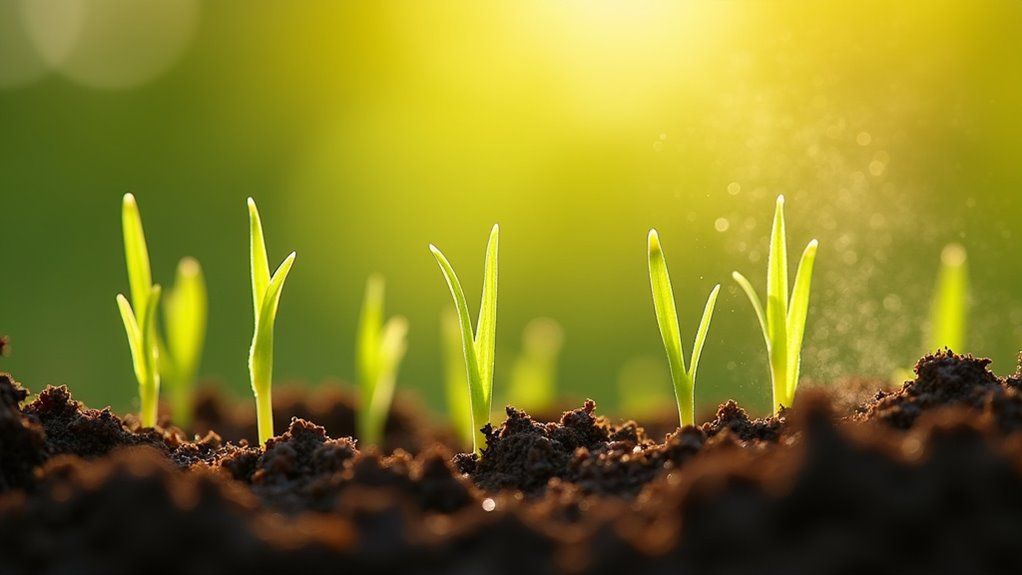
Understanding the key growth factors allows you to implement specific strategies that accelerate grass seed germination and development. Start by choosing a fast-growing grass variety suited to your climate zone and selecting a high-phosphorus starter fertilizer that promotes strong root development.
Enhance your watering techniques by maintaining consistent soil moisture through light, frequent irrigation sessions rather than heavy, infrequent ones. Cover the seeded area with a thin layer of mulch to retain moisture and regulate soil temperature. You can also pre-soak your grass seeds for 24 hours before sowing to jumpstart the germination process.
To boost growth speed, guarantee proper soil preparation by testing pH levels, aerating compacted areas, and incorporating organic matter. Time your seeding during prime growing seasons when soil temperatures remain consistently warm.
Frequently Asked Questions
Can I Plant Grass Seed Over Existing Grass?
Yes, you can plant grass seed over existing grass – it’s called overseeding, and it’s not as ridiculous as trying to put a toupee on your lawn! Beyond the humor, overseeding benefits include filling bare patches, improving density, and enhancing your lawn’s general health. For best lawn care results, you’ll want to mow your existing grass short, rake thoroughly to expose soil, and guarantee good seed-to-soil contact. Don’t forget proper watering for successful
germination.
What Happens if Birds Eat My Newly Planted Grass Seeds?
If birds eat your newly planted grass seeds, you’ll experience patchy germination and potentially need to reseed the affected areas. To prevent this, you can implement several bird deterrents like reflective tape, pinwheels, or plastic predator decoys. For effective seed protection, consider covering the seeded area with a thin layer of straw mulch or specialized seed blankets. You can also time your seeding for early morning, as birds are less active then.
Should I Remove Dead Grass Before Planting New Grass Seed?
Oh, you thought leaving that dead grass would create a cozy blanket for your new seeds? That’s adorable! You’ll definitely want to remove dead grass before seeding. Dead grass removal is essential as it prevents your new grass from competing for nutrients and creates direct seed-to-soil contact. Start by thoroughly raking the area to remove thatch and debris. This soil preparation step guarantees your seeds have the best chance of establishing strong roots and thriving in their new environment.
Can Grass Seed Go Bad if Stored Too Long?
Yes, your grass seed can go bad if it’s not stored properly. Seed longevity typically ranges from 2-3 years when kept in ideal storage conditions. To enhance shelf life, you’ll need to store your seeds in an airtight container, keeping them in a cool, dry place with temperatures between 40-50°F and relative humidity below 40%. If your seeds are exposed to moisture, heat, or dramatic temperature fluctuations, they’ll deteriorate more quickly and lose viability.
Why Did My Grass Grow in Patches Despite Even Spreading?
Your grass’s patchy growth could stem from several precise factors. Poor soil quality creates weak spots, limited nutrients restrict growth zones, and uneven soil compaction affects root development. You’ll often see patches where water pools excessively or drains too quickly. The seeds might’ve also faced competition from existing weeds, or birds could’ve disrupted your even spreading. To prevent this, you’ll need to address soil composition and drainage before seeding.